
Rosatom representatives highlighted the role of nuclear technologies in strengthening energy security and developing modern infrastructure
Rosatom State Corporation became a partner of the 28th Water, Energy, Technology and Environment Exhibition (WETEX 2026), held in Dubai, UAE, from 20 to 22 October. As part of the exhibition’s business programme, Rosatom representatives contributed to expert discussions on energy security, decarbonisation and sustainable infrastructure development, while showcasing Russian technological solutions to address global energy and environmental challenges.
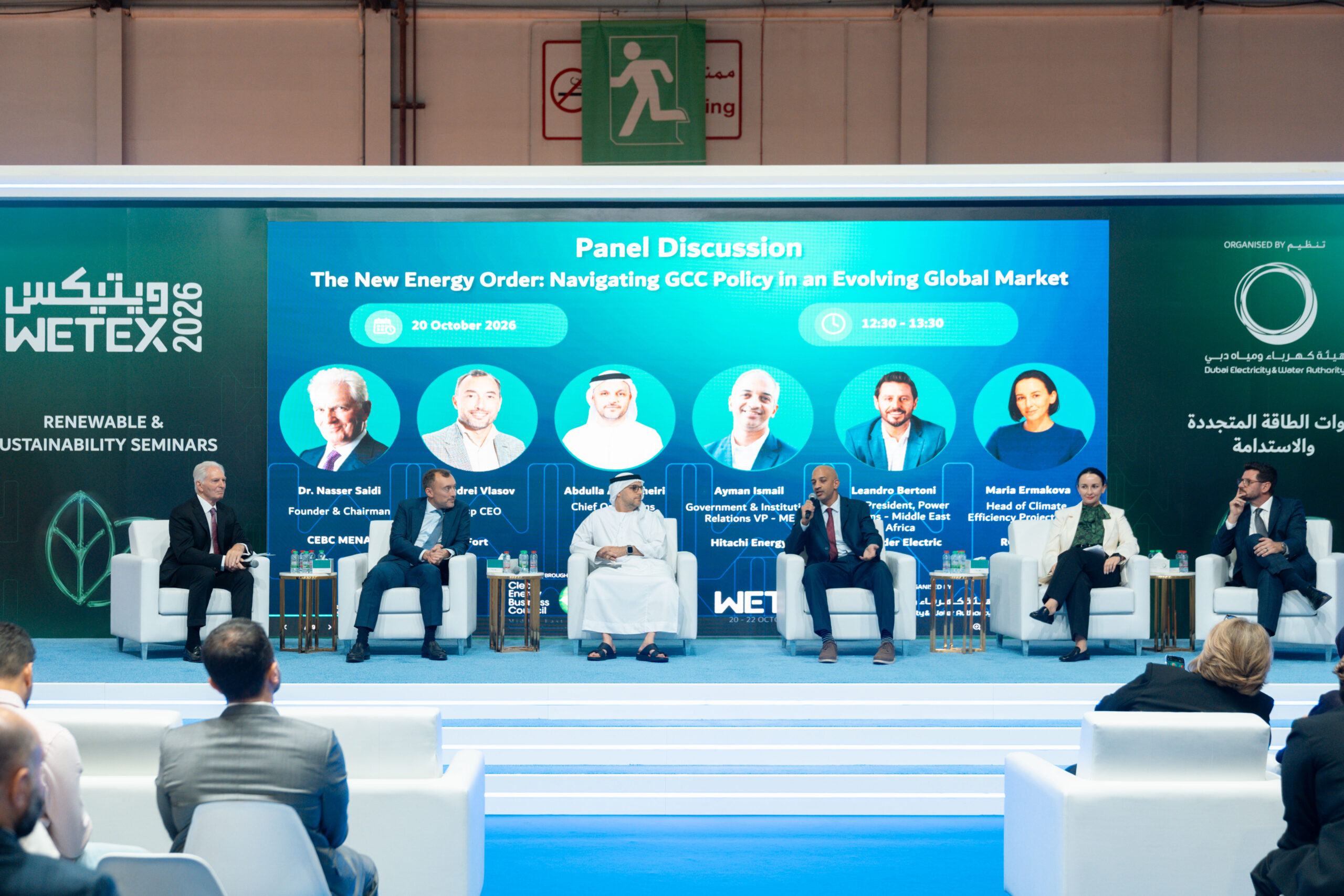
On 20 October, Maria Ermakova, Head of the climate Efficiency Project Office at Rosatom’s Sustainable Development Department, participated in the panel discussion «The New Energy Order: Navigating GCC Policy in an Evolving Global Landscape.»
In her remarks, Maria Ermakova emphasised that the global climate agenda is increasingly focused on practical mechanisms for achieving climate goals, their economic efficiency and their contribution to energy security. For businesses, decarbonisation represents not only an environmental responsibility but also new opportunities for growth. Nuclear energy, including small modular reactor projects, can play an important role in this transformation.
«In September, Rosatom submitted a draft methodology for climate projects based on small modular reactors under the Article 6.4 mechanism of the Paris Agreement to the Secretariat of the United Nations Framework Convention on Climate Change (UNFCCC). We expect its approval to mark an important step towards addressing the existing disparities in how nuclear and renewable energy are treated under international climate mechanisms. This would lay the groundwork for nuclear projects to participate in international carbon markets, create additional opportunities to attract investment and strengthen the role of nuclear energy as an effective tool for achieving climate goals,» said Maria Ermakova.
One of the key highlights of Rosatom’s business programme was a round-table discussion organised by the State Corporation under the title «Powering Tomorrow’s Infrastructure: Energy for Industry, Cities and Digital Growth.»
The discussion brought together representatives of government institutions, energy companies, industrial businesses and investment organisations from the UAE, Indonesia, Rwanda, Togo, Thailand and other countries.
The discussion highlighted the growing potential of floating nuclear power as a solution for industrial infrastructure development. These technologies can provide a reliable source of low-carbon electricity in locations where the development of conventional energy infrastructure presents significant challenges.
A major milestone in scaling up the technology was the recent agreement with Indonesian partners to implement the world’s first export project for electricity supply from floating nuclear power units. The project demonstrates the growing demand for and international potential of floating nuclear power technology, opening up opportunities for its further deployment in other regions of the world.
In a separate presentation during the WETEX 2026 «Sponsors Seminar», Igor Palamarchuk, Director of Rosatom Middle East and North Africa, showcased the State Corporation’s comprehensive portfolio of technological solutions in low-carbon energy, environmental protection, water treatment and international logistics. The presentation also highlighted the Northern Sea Route as an international transport corridor that can improve the efficiency of cargo transportation between Asia and Europe.
Throughout the exhibition, Rosatom representatives also held a series of bilateral business meetings with regional and international partners.